
Introduction to Tryptamine Chemistry
Introduction to Tryptamine Chemistry: Tryptamine chemistry forms one of the most important and fascinating areas in modern pharmacological research. Tryptamines are a class of compounds that play a central role in neuroscience, medicinal chemistry, and the study of the human brain’s serotonin system.
This comprehensive guide serves as a clear introduction to tryptamine chemistry for researchers, laboratories, and students interested in this versatile chemical class.
What Are Tryptamines?
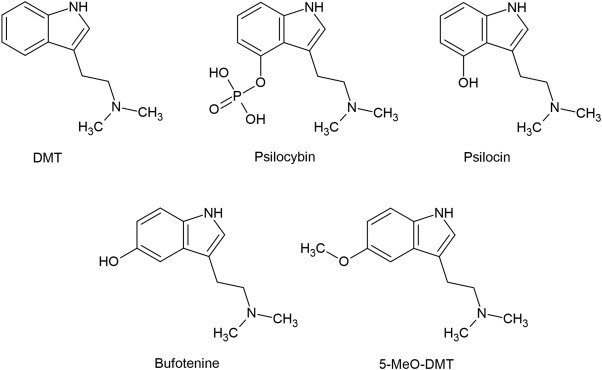
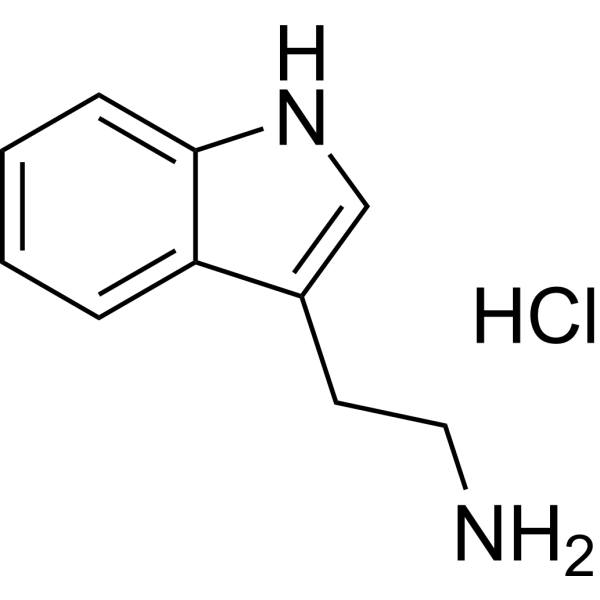
Tryptamines are organic compounds based on the tryptamine skeleton — a bicyclic structure consisting of an indole ring fused with an ethylamine side chain. This core structure is naturally found in many plants, animals, and even the human body (as the precursor to serotonin).
In tryptamine chemistry, scientists modify this basic scaffold by adding various functional groups to create novel analogs with specific research properties. These modifications allow researchers to fine-tune how the molecule interacts with biological targets.
The Chemical Structure of Tryptamines
The basic tryptamine structure features:
- An indole ring system (benzene ring fused to a pyrrole ring)
- An ethylamine side chain at the 3-position of the indole
- Multiple positions available for substitution (especially 4, 5, and N-positions)
This flexible structure makes tryptamines excellent scaffolds for structure-activity relationship (SAR) studies in tryptamine chemistry.
Key Research Applications of Tryptamines
Tryptamines are widely used in scientific research for several important areas:
- Serotonin Receptor Studies — Especially 5-HT2A, 5-HT1A, and other serotonin receptor subtypes
- Neurotransmitter Transporter Research — How molecules interact with SERT, DAT, and NET
- Psychedelic Neuroscience — Understanding mechanisms of altered states and consciousness (in controlled lab settings)
- Medicinal Chemistry — Developing potential leads for neurological and psychiatric research
- Analytical Method Development — Creating reference standards for detection
High-purity tryptamines are essential tools for accurate and reproducible results in these fields.
Common Tryptamine Classifications in Research
Within tryptamine chemistry, researchers typically work with several sub-categories:
- 4-Substituted Tryptamines (e.g., 4-HO, 4-AcO derivatives)
- 5-Substituted Tryptamines (e.g., 5-MeO series)
- N-Alkylated Tryptamines (various chain lengths on the nitrogen)
- Synthetic Analogs with unique modifications
Each substitution pattern creates compounds with distinct pharmacological profiles, making them valuable for comparative studies.
Why High-Purity Tryptamines Matter
In tryptamine chemistry research, purity is critical. Impurities can:
- Interfere with receptor binding assays
- Produce inconsistent or misleading results
- Complicate analytical characterization
- Affect compound stability
For this reason, laboratories prefer high purity tryptamines (typically ≥98% or higher) backed by detailed Certificates of Analysis (COA).
Popular Research Tryptamines and Their Uses
Researchers commonly study compounds such as:
- DMT analogs
- Psilocin-related compounds (4-HO series)
- 5-MeO substituted tryptamines
- DET, DPT, and other N,N-dialkyltryptamines
Each of these plays a specific role in advancing our understanding of tryptamine chemistry and neuropharmacology.

Best Practices When Working with Tryptamines
Successful tryptamine chemistry research requires:
- Proper laboratory safety protocols
- Correct storage conditions (usually cool, dry, and dark)
- Accurate analytical verification
- Detailed documentation of experimental conditions
- High-quality starting materials from reputable suppliers
Vylix Labs provides researchers with precisely characterized, high-purity tryptamines suitable for advanced scientific work.
The Future of Tryptamine Chemistry Research
The field of tryptamine chemistry continues to grow rapidly. New analogs are regularly synthesized to explore greater receptor selectivity, improved metabolic stability, and novel therapeutic insights.
As analytical tools and computational modeling improve, researchers can design more targeted tryptamine derivatives for specific scientific questions.
Conclusion: Building a Strong Foundation in Tryptamine Chemistry
This introduction to tryptamine chemistry highlights why tryptamines remain one of the most valuable classes of research chemicals available today. Their structural versatility, biological relevance, and research utility make them indispensable tools in neuroscience and medicinal chemistry laboratories.
At Vylix Labs, we are proud to support researchers by offering a curated selection of high-purity tryptamines across multiple substitutions and salt forms.
Ready to explore tryptamine chemistry in your own laboratory? Browse our tryptamine collection or contact our team for specific research recommendations.
All products are sold strictly for research and laboratory use only. Not for human or animal consumption.
FAQ – Introduction to Tryptamine Chemistry
Q1: What is the basic structure of tryptamines? Tryptamines consist of an indole ring with an ethylamine side chain at the 3-position. This core allows for many substitutions, making them highly versatile in research.
Q2: Are tryptamines the same as serotonin? No. Serotonin is a natural tryptamine, but research tryptamines are synthetic analogs designed specifically for laboratory study.
Q3: What purity level should I look for in research tryptamines? Most researchers prefer ≥98% purity, with many advanced studies requiring ≥99% for reliable results.
Q4: What is the difference between 4-HO and 5-MeO tryptamines? They differ in the position and type of substitution on the indole ring, which significantly changes their receptor affinity and research applications.
Q5: Are all tryptamines suitable for the same type of research? No. Different tryptamine analogs are chosen based on the specific receptor systems or properties being investigated.
Q6: Where can I buy high-purity tryptamines for research? Vylix Labs offers a curated selection of high-purity tryptamines with full COAs for laboratory use.