
Understanding CAS Numbers and Chemical Identification
Understanding CAS Numbers and Chemical Identification
CAS numbers are one of the most important tools for accurate chemical identification in scientific research. Every researcher working with research chemicals should understand how to read and use CAS numbers properly.
This guide provides a clear explanation of CAS numbers and chemical identification and why they are essential when sourcing and working with research chemicals.
What Is a CAS Number?
A CAS number (Chemical Abstracts Service Registry Number) is a unique numerical identifier assigned to every chemical substance. It is widely used globally to provide a standardized way of identifying compounds without confusion from different naming conventions.
CAS numbers are assigned by the Chemical Abstracts Service, a division of the American Chemical Society.
Why CAS Numbers Matter in Research Chemicals
Chemical identification using CAS numbers is critical because:
- Many compounds have multiple common or systematic names
- Structural analogs can look very similar but have different properties
- Accurate identification prevents ordering or using the wrong substance
- CAS numbers link directly to safety data, literature, and analytical references
For research chemicals, a correct CAS number is one of the first steps in reliable chemical identification.
How to Read a CAS Number
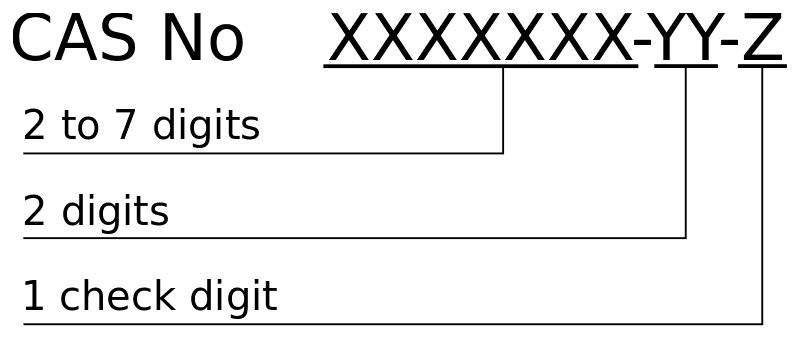
A CAS number consists of up to 10 digits separated into three groups by hyphens. For example:
- 123-45-6 (simple format)
- 12345-67-89 (more complex)
The final digit is a check digit used to validate the number. When reviewing supplier documentation, always verify that the CAS number matches the described compound.
CAS Numbers vs Chemical Names
While chemical names (IUPAC or common) can vary, a CAS number is unique. This makes CAS numbers the gold standard for chemical identification in:
- Laboratory inventories
- Safety Data Sheets (SDS)
- Scientific literature
- Regulatory documents
- Supplier catalogs
The Role of CAS Numbers in Quality Control
Strong suppliers use CAS numbers as part of their quality control in chemical analysis. When you receive a Certificate of Analysis (COA), the CAS number helps confirm you received exactly what you ordered.
This practice significantly reduces the risk of misidentification when working with novel research chemicals.

Common Challenges with Chemical Identification
Researchers sometimes face issues such as:
- Multiple CAS numbers for salts or different forms of the same base compound
- Novel analogs without assigned CAS numbers yet
- Confusing similar-sounding names
In these cases, combining CAS numbers with other identifiers (molecular formula, structure, IUPAC name) provides the clearest chemical identification.
Best Practices for Using CAS Numbers
When sourcing research chemicals:
- Always ask for the CAS number
- Cross-check it against reliable databases
- Verify it matches the product description
- Include the CAS number in your lab records
- Use it when searching scientific literature
Vylix Labs clearly lists CAS numbers (when available) for all applicable research chemicals to support accurate identification.
CAS Numbers and Safety
Proper chemical identification using CAS numbers is also a key safety practice. It ensures you are referencing the correct Safety Data Sheet and handling procedures for each compound.

The Future of Chemical Identification
While CAS numbers remain the standard, emerging technologies like:
- Digital molecular fingerprints
- Blockchain-based traceability
- AI-powered structure recognition
are complementing traditional CAS-based identification systems.
Conclusion: Mastering CAS Numbers for Better Research
Understanding CAS numbers and chemical identification is a fundamental skill for any researcher working with research chemicals. Accurate identification protects your work, improves safety, and ensures you are using the right materials for your experiments.
At Vylix Labs, we prioritize clear and accurate chemical identification so researchers can order with confidence.
Ready to explore our catalog? Browse our high-purity research chemicals with proper identification and documentation.
All products are sold strictly for research and laboratory use only. Not for human or animal consumption.
FAQ – Understanding CAS Numbers and Chemical Identification
Q1: What is a CAS number? A CAS number is a unique numerical identifier assigned to every chemical substance for standardized identification worldwide.
Q2: Why are CAS numbers important for research chemicals? They prevent confusion between similar compounds and ensure you order and use the exact chemical needed for your research.
Q3: How do I read a CAS number? It consists of digits separated by hyphens (e.g., 123-45-6). The final digit is a check digit for validation.
Q4: Do all research chemicals have CAS numbers? Most established compounds do, but very new or novel analogs may not have one assigned yet.
Q5: Should I check the CAS number on the COA? Yes. Always verify that the CAS number on the Certificate of Analysis matches the product you ordered.
Q6: Where can I buy research chemicals with clear CAS numbers and identification? Vylix Labs provides accurate chemical identification, including CAS numbers where available, with every product